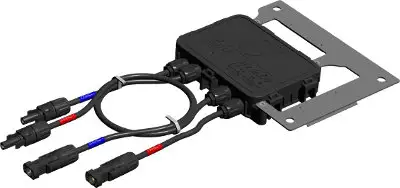
Today’s PV systems are typically comprised of panels connected in series to one another to form strings, and on larger systems, several of these strings are connected in parallel to form an array. Due to the nature of PV modules connected in series, the lowest-performing module will impact the performance of the entire array unless each individual panel can be optimized.
Solar Photovolataic Optimers enable each panel in an array to work independently of other panels in the string. Normally, if you have a number of panels in a single string, if one panel is shaded, or under-producing, it affects the output of all other panels in the string.
If you have partial shading, or roofs facing different directions, you need some way of ensuring that each panel is free to run at its optimal voltage and current.
Micro inverters are often proposed as a solution for partial shading. However, individual panel optimisers can perform all of the functions of micro inverters at a lower cost and without any of the disadvantages of micros;
However, micro inverters have disadvantages not suffered by optimisers;